Clinical Psychologist Singapore
PhD (NUS) Existential Humanistic Psychotherapy
Jungian Tradition Bilingual English and Japanese
There are moments when the standard answers stop working. When you have tried to think your way through something, and the thinking has only taken you further in circles.
There are moments when we feel stuck despite our best efforts. Some things can only be said in your own language. Other things, workplace pressures, family expectations, or thoughts that persist despite your efforts to manage them, need a space where you don't have to explain or perform. We go slowly here. No quick fixes, no worksheets. Just careful, spacious attention to what's actually happening in your life.
日本語でのカウンセリングも承っております。
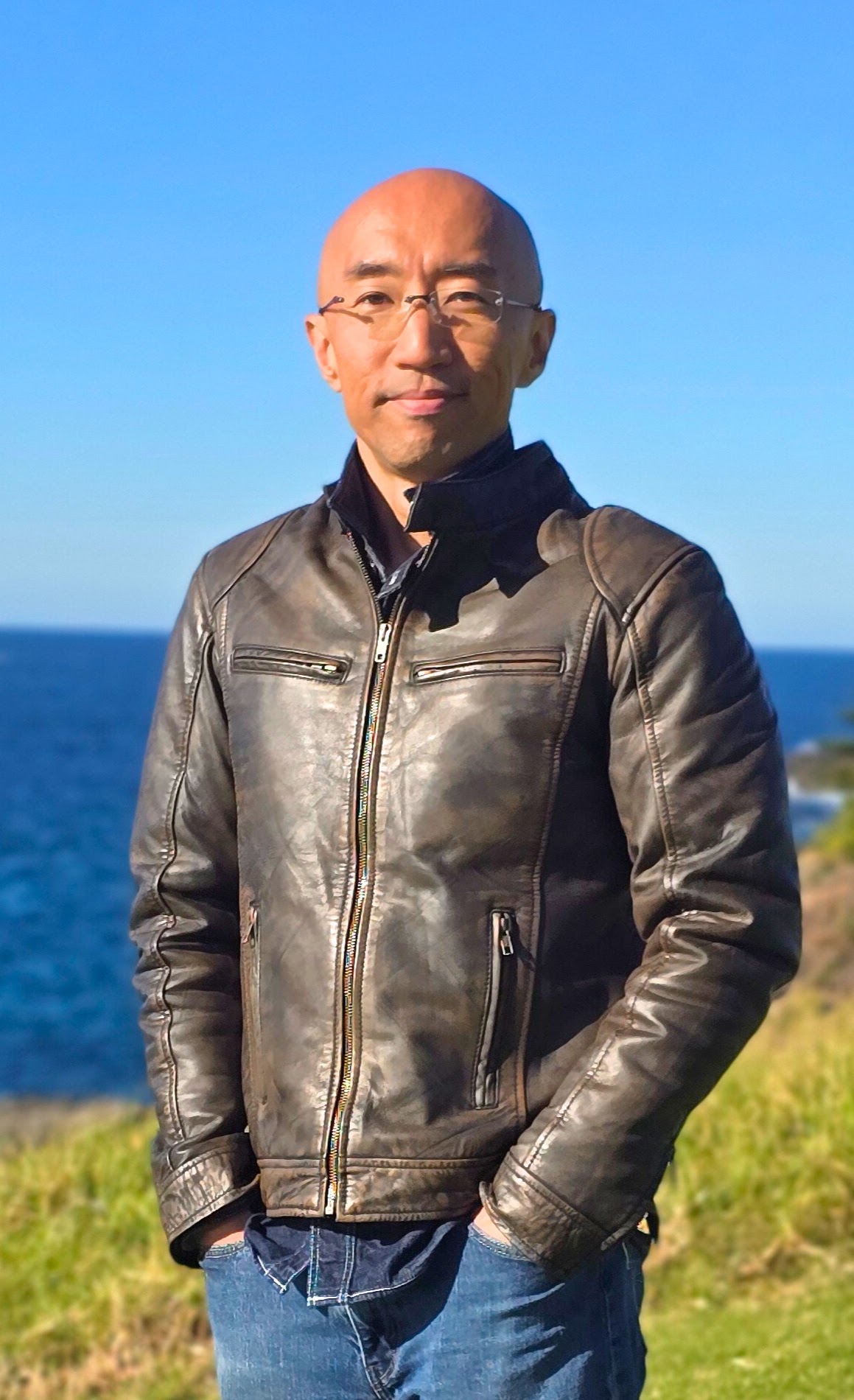
Photo of Dr. Takashi
Education
Clinical Experience
Sessions available
Who comes to see Dr. Takashi
Singaporeans
Patterns of thought that persist despite your best efforts. Intrusive thinking that doesn't respond to logic alone. Sleep disruption. Work related stress that has become difficult to navigate. Relationship strain. Family expectations that create ongoing pressure. You may have tried structured approaches or self help strategies. What you're looking for now is a therapeutic relationship that goes deeper than symptom management, someone who can be present with the full complexity of what you're experiencing.
You've found yourself caught in cycles you can't seem to break. The anxiety persists. Coping strategies provide temporary relief. Sleep difficulties. Workplace dynamics that feel increasingly difficult to manage. Family pressures. Relationship challenges. Outwardly, things may appear stable, yet internally, something feels unresolved. You're seeking support that goes beyond techniques and worksheets, a space where your experience can be met with full attention.
Dr. Takashi creates a space to explore what's beneath the symptoms together.
日本語対応 Japanese speaking clients
Living away from Japan brings pressures that are hard to put into words, especially in a second language. The effort of adapting, performing, and holding it together in English is real and it is tiring. Dr. Takashi offers a fully Japanese language therapeutic space, with a cultural understanding that goes beyond translation.
日常的な悩みから深い実存的なテーマまで、母語で丁寧にお話しいただけます。
What we offer
Long form, in depth work with adults. Existential concerns, identity, life transitions, relationships, anxiety, depression, burnout, and the sense that something important is missing. Sessions conducted in English or Japanese, 英語日本語対応. Therapy can work at different levels. Some things can be structured, measured, and systematised, and there is real value in that. But not everything fits into a framework. Not everything can be turned into a technique.
| Counselling (guidance and support) | Psychotherapy: Structured approaches (e.g. CBT) | Psychotherapy: Existential and Jungian approaches | |
|---|---|---|---|
| What It Addresses | Day to day concerns, emotional support, practical guidance through specific situations. | Specific symptoms and behaviours that can be identified and managed directly through techniques. | The underlying patterns beneath the symptoms, identity questions, cultural dislocation, and what is driving the thoughts that loop despite your best efforts. |
| Time Frame | Flexible, often shorter term focused on immediate concerns. | Typically short to medium term, focused on symptom reduction and measurable outcomes. | Open ended. The work moves at the pace of genuine change, not a fixed number of sessions. |
| Therapist's Stance | Supportive and guidance oriented, helping you process and decide. | Active and directive, providing tools and frameworks to work with specific concerns. | Present and unhurried. The therapist does not arrive with a preset agenda or worksheets, but with full attention to who you are and what you are bringing. |
| What It Asks of You | Willingness to talk through what is happening and consider different perspectives. | Engagement with exercises, tracking thoughts and behaviours, and practising techniques between sessions. | A willingness to sit with uncertainty, look honestly at your life including what isn't working, and let the process take the time it needs. Cultural context and identity are welcomed, not something to explain. |
| Best For | Specific life situations, decision making, emotional processing, supportive listening. | Acute symptoms, specific phobias, panic attacks, situations where a clear and bounded target exists. | Persistent anxiety that doesn't respond to logic alone, identity and cultural belonging, workplace or relationship patterns that keep repeating, the feeling that something is missing even when life looks fine on paper, grief, life transitions, and questions of meaning. |
trained across three traditions
Over two decades of training and practice, Dr. Takashi has drawn from three traditions. Not as separate tools, but as a single, integrated way of being with a person.
Trained at Seattle University, one of the few programmes in the world dedicated entirely to the existential-phenomenological tradition. This approach does not reduce a person to their symptoms. It asks: what does this experience mean, and what is it pointing toward? It works with the whole of a life: identity, freedom, belonging and the search for meaning.
Three years of intensive Jungian training and supervision at the Sanno Institute of Psychology, Tokyo, under Dr. Yasuhiro Tanaka, a certified Jungian analyst. This tradition brings the unconscious into the room: dreams, patterns, archetypes, the parts of ourselves we have not yet met. It is slow, careful work that goes where other approaches may not reach.
Behind the clinical work is a research doctorate in experimental psychology from NUS and years of postdoctoral work studying how human beings process the world around them. For Dr. Takashi, existential and philosophical inquiry and scientific rigour are not in tension.
The Person Behind the Practice
In his twenties, Dr. Takashi played in an underground punk rock band in Tokyo, not as a hobby, but as a committed pursuit of something that could not be expressed any other way. The music was raw, loud, and deliberately outside the mainstream. The album was released independently and is still available to listen to today.
He would go on to spend the next two decades studying the inner life with the same intensity he once brought to a stage. The quality of any therapeutic relationship depends, in part, on who is in the room. Dr. Takashi does not believe in the idea of a therapist as a neutral technician. What he brings into the room matters, a personal history that has nothing to do with textbooks.
Punk rejected the polished, the safe, the commercially acceptable. Existential therapy asks you to set aside the version of yourself you have been performing and look honestly at what is actually there. Both demand a kind of honesty that costs something.
Punk was personal in a way that pop was not. It came from somewhere specific and real. Existential and Jungian therapy insists on the same: your life cannot be understood through a generic framework, and the only answers worth finding are the ones that belong to you.
Underground music was not comfortable to make or to hear. Neither is the work of genuinely examining a life. Dr. Takashi does not try to make the process painless. He tries to make it worthwhile and to be fully present for the parts that are hard.
Professional Background
SACAC Counselling Pte. Ltd. · Singapore · Part-time
The N.1 Institute for Health · Singapore · Full-time
Yale-NUS College · Singapore
Singapore Institute for Neurotechnology (SINAPSE)
Tokio Marine Group · Tokyo · Full-time
Taisho University · Tokyo · Full-time
Get in touch
No pressure. Just reach out, and we'll figure out the rest together. We'll respond within 24 hours.
Your information is kept confidential. For mental health emergencies, please see the note at the bottom of this page.
Important notice: The content on this page is for general informational purposes only and does not constitute a claim of therapeutic outcome or treatment efficacy. Psychotherapy is a regulated healthcare service and individual experiences vary. Dr. Takashi Obana is a Japan-certified Clinical Psychologist practising in Singapore. All services are provided in accordance with applicable professional and ethical standards. Personal narratives on this page are shared to help prospective clients understand the practitioner's background and values, and should not be interpreted as a guarantee or prediction of results. This page is intended to comply with the Private Hospitals and Medical Clinics Act (PHMC) and applicable healthcare advertising guidelines in Singapore. If you are experiencing a mental health emergency, please contact the Institute of Mental Health (IMH) Emergency Hotline at 6389 2000, the Samaritans of Singapore at 1767, or visit your nearest emergency department.